Let people off first
Stand to the side of train doors. Board only after passengers have left, and move down inside instead of stopping at the entrance.
The city operating manual
Useful habits for trains, late nights, airports, money, luggage and small cultural differences—written for a first visit and linked to the authorities that control the details.
Move like a considerate visitor
Stand to the side of train doors. Board only after passengers have left, and move down inside instead of stopping at the entrance.
Leave the left side clear for people walking. If you cannot stand securely, use the lift or hold the rail and prioritise safety.
Have one card or device ready, then move away from the barrier before checking directions or reorganising bags.
Notice priority-seat signs and offer space to someone who may need it more. Not every disability is visible.
Work backwards from the final usable journey—not the venue’s closing time. Include the walk to the station, entrance closure risk, interchange time and a missed-train fallback. Night Tube operates only on named lines and nights; never infer it from a daytime map.
Official live journey planner: Transport for London • checkedCheck once when planning, again in the final week and again before leaving. TfL status covers its network; National Rail engineering notices cover the Euston–Watford leg and airport rail services. Save an alternative station or route before a fixed booking.
TfL status: Transport for London • checked Rail engineering work: National Rail • checkedBookmark these—not screenshots
Five different corridors
International visitor basics
Britain uses Type G three-pin plugs and 220/240V AC at 50Hz. Check your device’s voltage label; an adaptor changes the plug shape, not the voltage. Ask your mobile provider about roaming before travel or compare an unlocked-device SIM/eSIM.
Source: VisitBritain • checkedPound sterling uses the symbol £ and divides into 100 pence. Cards and digital wallets are widespread, but check foreign-transaction fees and keep a small fallback rather than carrying a large cash balance.
Source: VisitBritain • checkedTipping is optional. Check a restaurant bill for an included service charge before adding anything; no extra tip is needed simply because the terminal asks.
Source: Visit London • checkedCall 999 when a crime is in progress or someone is in immediate danger; use 101 or online reporting for non-emergencies. Keep phones and wallets secure near roads, station doors and dense crowds.
Source: GOV.UK • checkedLuggage on public transport
Keep bags out of aisles, doors and accessible spaces; do not assume every station has a lift. Avoid peak commuter periods where possible, keep valuables attached to you and never leave luggage unattended. A taxi may be the sensible choice when several people, large cases or a difficult hotel walk make rail theoretically cheaper but practically exhausting.
Weather-aware day bag
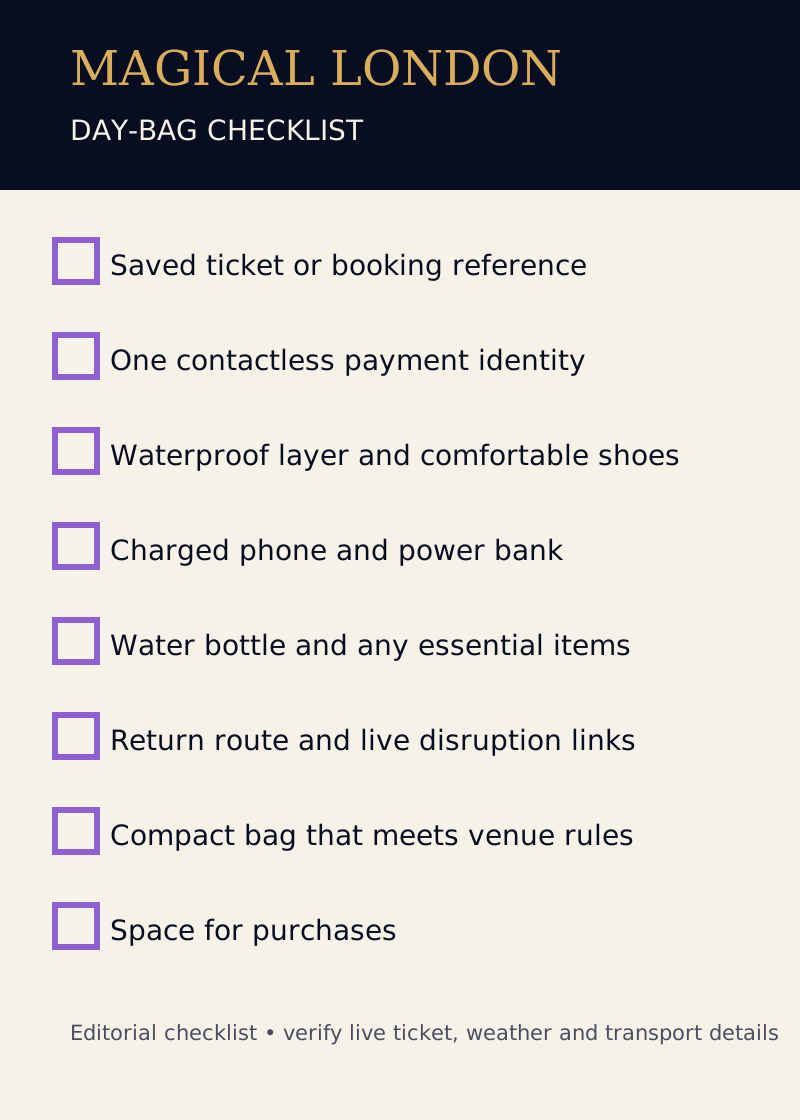
Forecasts and venue rules change. This checklist is an editorial starting point, so recheck the weather, ticket and named venue restrictions before leaving.
Download illustrated checklist
British English in one minute